
"Europe's Access Dilemma" (2/5) - Europe Can't Pay More For Innovation: The Case For Co-developing With Asia

 YouTube

 Spotify

 Apple Podcasts
What if Europe’s answer to the rising cost of pharmaceutical innovation wasn’t simply to pay more, but to develop differently?
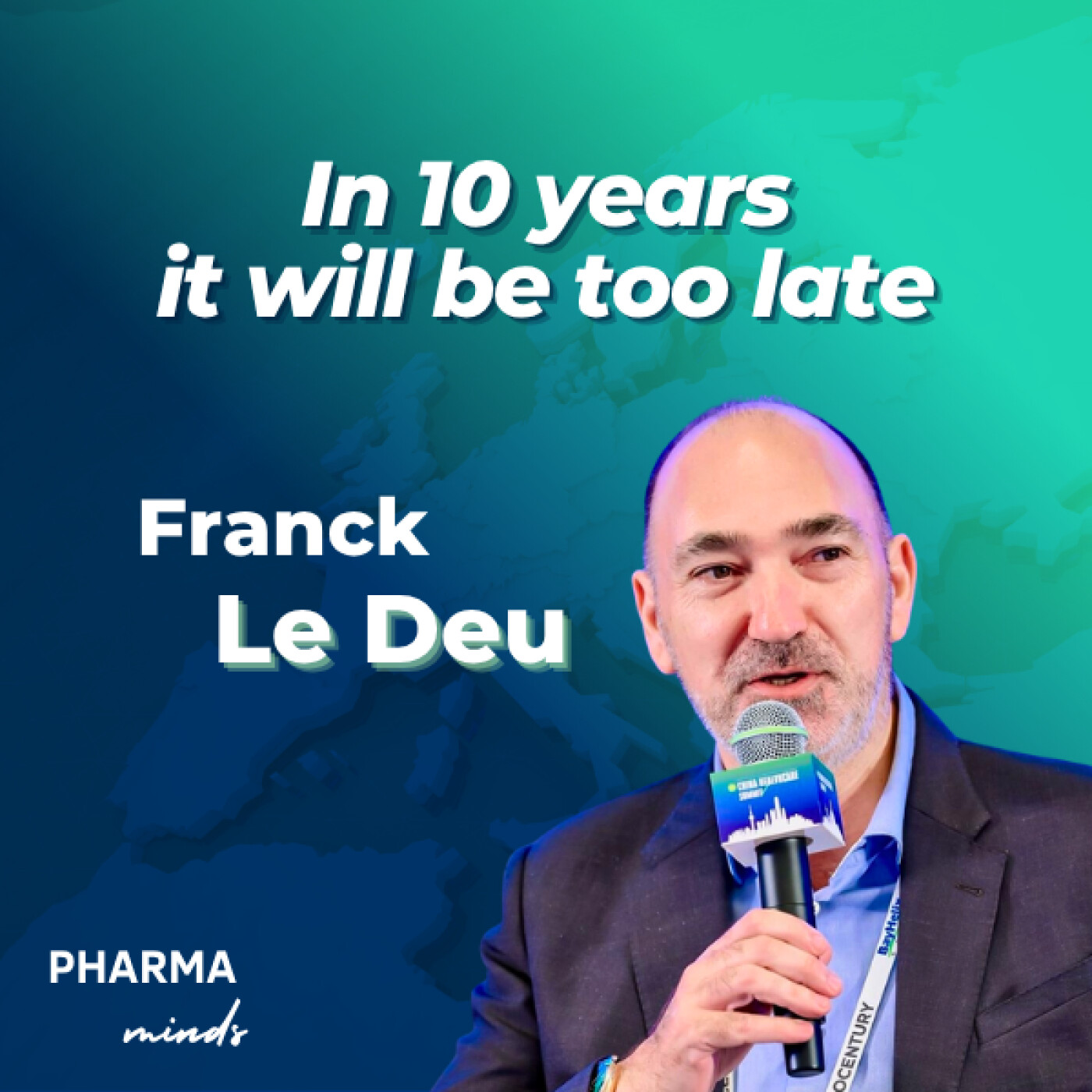
In this episode of Pharma minds, I speak with Franck Le Deu, one of the few European voices with decades of first-hand experience inside Asia’s rapidly evolving biopharma ecosystem.
Franck spent 20 years in China as a Senior Partner at McKinsey, advising some of the world’s largest pharmaceutical companies as China transformed from a market for Western medicines into a global source of biopharma innovation. Today, he is working on building bridges between Western innovation and Asian capabilities. That transformation is at the heart of our conversation.
Because Europe faces an uncomfortable equation.
The pharmaceutical industry has become increasingly US-centric. The majority of its profits are generated in the US, investment has followed, and Europe has progressively lost influence. At the same time, European governments face growing fiscal constraints, making simply spending more on innovative medicines increasingly difficult.
Franck makes the case for another path: co-development with Asia.
We explore:
◾️ How China became one of the world’s leading biopharma innovation ecosystems
◾️ Why US pharma is moving faster than Europe to tap into Chinese biotech innovation
◾️ How Asia could help reduce the cost and accelerate the execution of clinical trials and drug development
◾️ Why Europe can no longer afford to look at China only as a competitive threat
◾️ What Europe–Asia co-development could look like in practice
◾️ How Europe could combine Asian capabilities with its own strengths in research, development and manufacturing
◾️ And whether this model could help Europe regain pharmaceutical competitiveness while protecting its sovereignty
Franck’s argument is not that Europe should replace its relationship with the US with China. It is that Europe needs to engage with Asia strategically, learn from ecosystems that move faster, and build new forms of collaboration that preserve European strengths and sovereignty.
Ultimately, making pharmaceutical innovation accessible to more patients will require more than higher budgets. It means bringing R&D and manufacturing costs down, rethinking pricing, and creating ecosystems that know how to collaborate and compete.
This is episode #2 of Europe’s Access Dilemma: five perspectives on how Europe can make innovation affordable.
Franck Le Deu: https://www.linkedin.com/in/franck-le-deu/
Resources mentioned in the episode:
📌 PhRMA Forum 2026 - “China’s Leading Edge: What’s at Risk” : https://www.innovation.org/phrma-forum/
📌 “Europe’s narrow path between the U.S. and China in biotech”, an article from Franck Le Deu, BioCentury : https://www.biocentury.com/article/659819/
Further reading from Franck Le Deu:
📌 “In support of a multipolar biopharma world: Guest Commentary", BioCentury : https://www.biocentury.com/article/658573
___
📩 Subscribe to the newsletter : https://nathalielahitte.substack.com/
Hébergé par Ausha. Visitez ausha.co/politique-de-confidentialite pour plus d'informations.
0:00 Welcome to Pharma Minds, the media for committed leaders in pharma and healthcare. Here we take the time to explore the ideas, strategies and people shaping the future of our industry. If you'd like to understand before the rest, subscribe now and hit the bell to stay ahead. To think that we could really spend much more money on innovative drugs, I think is foolish. If you look objectively at what has happened in the past 20 years, Europe... I've been a massive loser of influence in this industry. What could be the solution? The solution could be that European companies collaborate with Asian companies to develop together innovative drugs that are actually very efficacious and some of them could even over time be first in class.
0:48 And those drugs are developed with a different market than the US market in mind. In our last episode... Christopher gave us his perspective on Brussels, but today I want to push the conversation in a very different direction. I am with Franck Ledeux. Hello, Franck. Hello, Etienne. Franck, you spent 20 years in Asia at the top of McKinsey, advising the world's largest pharma groups. You watched China going from a simple market to a true global source of biopharma innovation. Now you're kind of back. to Europe or between Asia and Europe, and you carried the message that challenges the consensus, and I think it could not be more timely.
1:36 In this episode, we talk about the geopolitics of innovation, and I would like to start with a bit of your background. When exactly did you realize that China was not just a market, but a real source of global innovation? Well, Hello again, Nathalie, and thank you for having me on your podcast. So in terms of background, I was born in France. I'm still French, but I left France 25 years ago. I spent quite some time in the US actually before moving to Shanghai in China in 2005. So roughly 20 years ago, I was working with McKinsey for a long period of time. Actually, I left McKinsey only last year.
2:16 So I spent two decades in China advising big pharma companies, biotech companies, metal companies as well. A lot of my work was in China, but I also did some work across Asia more broadly. And to your question, we could sense a transformation happening in China, I would say, as early as 2013, so about 12, 13 years ago. Before that, the conversation about China was largely about how do I bring my drugs to the Chinese market and how do I sell in the Chinese market. The conversation around China becoming a source of innovation started a little bit in 2013. You could start to see you what we call sea turtles, American Chinese or Chinese Americans folks who wanted to come back home and felt that something was about to happen and started to come back and started to create companies, companies like Wuxi Apptech, for example, that started to provide CRO services.
3:11 But the real transformation started at real pace, I would say, in 2017, when China started a huge reform of the equivalent to the FDA called the NMPA. China joined ICH for clinical trial standards, guidelines, and really started also a reform of its capital market to allow much more venture capitalists to invest in China innovation. We had the opening of the Hong Kong exchange for biotech companies. And very rapidly, capabilities across the value chain started to improve. I think some early believers in the Chinese innovation started as early as 2017-18 to take bets on the China innovation.
3:53 But there were a few, it was not the majority, it's only a few years later, that in the face of the evidence that the China innovation was real, that the quality was rapidly improving, and increasingly that Western companies had to learn from the Chinese companies, that we started to see a huge flow of interest that started in the US, I would say, and then caught up a little bit in Europe. And now you could argue that China is, after the U.S., the second most important innovation ecosystem in the world. On some dimension, it is already ahead of the U.S. when you think, for example, of early-stage trials and maybe application of AI to drug discovery, things like that.
4:35 So it's very clear that we have seen an incredible transformation. I was very lucky to be part of that journey. over the last two decades. I'm actually now in my post-McKinsey life, more dipping into the venture capital world, and I joined an investment firm that is going to look to support innovation companies from the West, from the US, from Europe, or Asia, that can tap into the Asia ecosystem for clinical trials. So it's a long, long story that I will try to distill a little bit today on this podcast, and in particular, thinking about the implication for Europe, because as a French... I'm very interested in the topic of sovereignty for Europe. And I think biopharma, biotech is a very important topic where a lot needs to happen if we don't want France and Europe probably to fall behind even more on a very important industry.
5:24 That's why you're here today, because I think we're wanting something to happen. And we start to see some big deals between biopharmas and Asia or France there. but... What we mainly see is that Europe still underestimates this movement and what happens in Asia or in Chinese companies. Yeah, I think it's, I don't know if it's specific to the pharma industry, but I think in general, at least that's my observation as a French who still lives in Asia, by the way. I'm still based in Asia and I come back to Europe a bit more than before, but I'm still based in Asia. But when I come back here and have discussion with people in the industry and across industry, I'm struck by...
6:09 The lack of understanding still today in 2026 that a large number of fellow Europeans have about what's really happening in Asia. I think the electric vehicle is a wake-up call a little bit. People realize that the Chinese are doing cars now that actually bear what Europeans can produce. And that's a big wake-up call, I guess. But when you look at what's happening across industries, when you see how far ahead China is now in many dimensions, I think a lot of people have not yet understood what is happening there. And I guess it applies as well in biopharma. I think people have heard about it. They kind of know something is going on. But until you actually have taken the plane and spent some time on the ground to see with your own eyes and hear with your own ears what's going on, I mean, it's tough to really portray and understand the magnitude of the change, the scale, the speed of what's happening there.
6:59 I think that's what I'm hoping to do a little bit in my time is actually try to... create more of a bridge between Asia and Europe on both sides. And it's a two-way bridge so that people on both sides can understand what's happening on the other side, but also understand how collaborations could happen. I think right now the people who understand what's happening are some of the big pharma companies. And today we got this on Wednesday. And I saw that the new deal was just announced by Eli Lilly, who is going to partner with a Chinese company to have this Chinese company. work on new targets and doing basically very early stage work for really in China. Just a few weeks ago, we had another significant deal between Pfizer and Innovent along the same lines.
7:44 We also had a deal between Bristol-Myers Squibb and Hungary, a lot of American companies, by the way. Yeah, some European also doing deals, right? But you know, the Americans, despite geopolitics, are actually tapping actively into the China ecosystem. You have a few midsize pharma companies who are also looking at it. And then you have like special purpose vehicles that are being set up by venture capitalists. A lot of them from the U.S. again, RA Capital, for example, and others, who basically source assets from China and then bring them home to the U.S. and put experience team around them to develop the drugs for the U.S. market and global market later on. So a lot is happening. From Europe's side, there's a few things as well.
8:25 But I would say that if you ask today the CEO of a biotech in Europe, how are you thinking about integrating Asia and China in particular into your clinical trial plans, many of them don't have a good answer. You know, they don't really know how to start. And if you look at the deals made by European companies, yes, AstraZeneca is very active, you know, Roche is quite active, JSK as well. But overall, I would say the Europeans are not ahead of the Americans at this point, maybe a bit behind. So that's interesting to me because Europe has a lot to gain in this new ecosystem, a call multiple polar biopharma world where maybe the US, Asia and Europe can collaborate and compete as well, but do it in an intelligent way that can benefit patients.
9:09 We'll conclude in the end with what a CEO can do. But I would like to go a bit before. You said many things are very attractive in Asia and China today. Maybe can you give us a list of what is really interesting to look at? Sure. So first, I think for people on the podcast, it's important to understand that it's a story that goes beyond China. Korea is another country that is really making huge progress in biotech. Australia, actually, so it's not just East Asian countries, Australia as well in Asia Pacific, is also extremely interesting when it comes to running clinical trials, in particular phase 1B and 2A, that you can run in Australia very effectively at lower cost and with very efficient processes.
9:56 Singapore itself has some interesting assets as well that it can bring to the table. And Japan is also waking up a little bit and trying to revive its biotech industry. So. What's happening in China is very important, but there's a broader story of Asia that's rising in biotech. So you could say almost like innovation is being democratized and innovation is happening everywhere around the world. And every day, multiple new biotech companies are being created, whether it's in Europe, the U.S. or Asia, which is great for patients around the world. What Asia can bring is efficiency, you know, the ability to maybe. challenge the status quo when it comes to regulatory processes, how to start and run clinical trials.
10:37 I mentioned Australia, but China as well has pushed a lot of reform to make the overall clinical trial on that much more efficient. Obviously, China brings huge patient population that can allow faster recruitment for clinical trials. And that's often the bottleneck to run trials and therefore adds to cost. China can also bring maybe a different ways of thinking of how to work, actually, which is a topic that in the West is a little bit sensitive. And I know that when I say that, I may potentially offend some people, but the truth is people in Asia tend to work harder than people in the West, or more efficiently, or use different communication channels that make their work more effective.
11:20 And I think without falling into the trap of maybe the Asians are working too hard and don't have the right work-life balance, um There's a reality as well that they have figured out something about collaboration with the working that is extremely efficient and allows them to make progress extremely rapidly in a very disciplined way. There's also something about the role of the government in setting priorities for industries and giving the umbrella for industry participation to make sure that they have enough visibility on what will come and how much of a priority it is for the government so that people can invest. So there's a lot of lessons, what you can see as well, if you want to make this more concrete.
12:04 If you are a new biotech from Europe or a new biotech from the US, you can potentially think of doing more with less. So doing more meaning potentially running trials across a broader range of indication for your lead program. Doing it faster and speed in biotech is probably the most important. A tribute your company can have beyond having obviously great science and a great management team, right? You have to go fast and you have to go faster than competition. And China and Asia in general is a great way to accelerate a lot of things in your processes. So, you know, it's a combination of efficiency or challenging the status quo, different ways of working, taking more shots on goals, which is very important, right?
12:53 At the same time, and I think that's also very important for people here to understand. The China biopharma market and biotech world is far from being mature at this point, I would say. In particular, China as a country does not value innovation sufficiently, which means that the end market to basically sell innovative drugs in China is still surprisingly small. When you think about the size of the population and the perception we may have, the size of the innovation market today in China is probably still smaller than the French innovation market. for a population that is, what, 25, 30 times bigger, right? 68 million versus 1.3 billion. So 20, 25 times.
13:34 That market is still constrained and has very low pricing. And therefore, if you are a Chinese biotech company and you have some interest in drugs, you actually cannot make a living by just selling your drugs in the Chinese market. Therefore, you have to partner, which is where, obviously, multinationals from Europe and the US or Japan And... can find great collaboration opportunities because on the one hand the western world is looking for innovative drugs and to move faster and on the other hand the chinese ones are looking for ways to create value out of their assets that goes beyond what they can get from just the chinese market that's why you see a number of deals in the last 12 months where the chinese partner is looking to not just unlicensed drugs to a Western country.
14:22 company, but also to secure commercial rights so that they can learn actually how to commercialize their drugs outside of China, step by step, as the Chinese like to do, so that one day we can actually stand on their two feet and not just become an outsourcing shop of innovative drugs to the West, which is not what they want to do. And today we see that the economic value of the pharma industry is almost entirely captured by the U.S. What does it mean concretely for European decision makers? Yeah, on this, I mean, it becomes quite political, obviously. And, you know, I had the opportunity to go to Washington, D.C. back in March. I was on stage at this pharma forum organized by pharma, a big U.S.
15:05 organization. I was on stage with former head of the FDA, Scott Gottlieb, and the governor of Rhode Island. Gina, Raimondo. And the topic was pretty much about how do we stop China and make sure that the U.S. keeps its domination on the industry. And, you know, I'm not anti-American. I'm actually a big fan of many things the U.S. does, and I've spent seven years of my life in the U.S. and have many American friends. But I must also say that as a European, we cannot be happy with the way the industry is evolving today. The truth is the industry has become increasingly U.S.-centric in the last 20 years.
15:46 If you look at multiple metrics, so for example, what's the share of revenues for big pharma companies coming from the U.S. market? And the answer, if you take the top 20 companies, including Japanese and European companies, is over 55%. What's the share of profit coming from the U.S.? Nobody has an exact number on that, but from my conversation, I think it's north of 75%. The vast majority of profits and revenues in this industry are created by the US market. And the US market is what? 4% of the world's population. So we have a global industry and there's no industry that on paper is more global than the pharma industry because a drug that works in a French way works in an American, and in Japanese or Chinese, there might be some technical differences on efficacy, things like that.
16:33 But by and large, drugs are developed for the world, for all patients on the planet. But it's actually a small proportion of patients in the world, largely in the U.S., that drive the economic service industry. And that's why it becomes a bit complex. You see President Donald Trump, through his policies, in particular, most favored nation, present policy, MFN, trying to get the Europeans to pay more for innovations. It's become a huge topic, right? But the reality, and I don't know if he's ignoring it by ignorance or just... you know, as a different agenda. But if you look at it, the fact that the revenues and profit are largely in the U.S.
17:14 has been usually beneficial to the U.S. economy. Because when you look at where, for example, where do all the IPO take place? In the Western world. It's in the U.S. There's no IPO market in Europe. If you're a European entrepreneur with an interesting innovation idea, you may do your Series A in Europe and you see the Series A in Europe and the Series B. Beyond, you often have to take up U.S. capital, and if you want to go public, you have to go to the NASDAQ. That's the answer right now. You have to move part of your management team to the U.S. And over time, a lot of the innovation that comes from Europe is actually captured by U.S. organizations, venture capital and big pharma.
17:54 If you look at the economic development of Boston, Cambridge, or San Francisco, Palo Alto, there's been a huge economic boom driven by the biopharma industry. If you look at the service industry, it's usually where it's legal or consultant or whatever, used in the U.S. If you maybe also look at other aspects of economic development, for example, manufacturing, right? Manufacturing, opening up of R&D center, the flow of investment is moving to the U.S., including from some of the biggest European companies like AstraZeneca, for example, right? So it's a flow of investment. towards the US that is driven by higher pricing in the US.
18:34 There's other factors like faster regulatory system, more transparency in capital market, things like that. But at the end of the day, if you look objectively at what has happened in the past 20 years, Europe has been a massive loser of influence in this industry. And this is playing out, by the way, in other industries, as we can see every day. We know that Europe is losing relevance across a range of industries. The question is, is it... It's still time to act and try to change that. And my position is that the rise of Asia as an alternative ecosystem to the U.S. ecosystem is an opportunity for Europe to rethink how it participates in this global market and maybe through rebalancing, regain some competitiveness and relevance.
19:18 The fact is that Europe is under an enormous budget pressure. We have rearmament, we have pension deficit, we have fiscal constraints. Is that realistic that France, Germany, the UK can keep paying for American innovation at full price? So it's, you know, we always say that healthcare is complicated and pricing is complicated. So it's very difficult to know what is the real price that should be set for any drug. What we know today is that the pricing in the US is two to three times higher than the price in Europe. The prices in Europe is two to three times higher than China, which itself is like five times higher than India. I mean, so there's like huge differences between big countries around the world.
20:00 We know that the high pricing in the U.S. drives a lot of positive outcomes, including the willingness to take big risks when it comes to new science, new research, first-in-class, new biology, all of that. We also know that the ability of Europe to pay more. and therefore to get closer to U.S. pricing is very limited. I'm not saying that Germany, France, the U.K. could not spend more on new drugs. And I'm not saying it would not be a good thing to do. It probably would be a good thing to do at some level, right? But I doubt that the countries, regardless of who is in power, have the ability to do that in the next few years. Why?
20:40 Because we all know that there are some other priorities. You didn't mention, I think, military. We know that we need all those countries to increase. contribution to the military in their GDP from what, 2% to 5% in the next few years. And that's going to be priority number one, number two, number three. Then we have pension plans to fund all of that. So to think that we could really spend much more money on innovative drugs, I think is foolish. Countries may give some gesture to Trump to appease him a little bit like the UK has done, but I think fundamentally it will not be a significant shift. So this being established, What could be the solution? The solution could be that European companies collaborate with Asian companies to develop together innovative drugs that are actually very efficacious, and some of them could even over time be first in class.
21:31 And those drugs are developed with a different market than the U.S. market in mind. If you think again about population distribution around the world, Europe is 450 million people, China, even if you take out rural China, you still have half a billion people who could access innovative drugs. You add Latin America, Southeast Asia, Middle East, I mean, you get to, what, 1.52 billion people, not the 4% of the U.S. Open the mindset, yeah. Yeah. So the question becomes, okay, why are companies not doing this? I think some are going to start to think about it, but this will be a decade-long journey, probably, because there are huge implications on how you manage your pipelines. There needs to be big changes in terms of regulatory integration between Asia and Europe. We've been in Europe first, but also within Asia and Europe.
22:13 You need to think about the manufacturing implication, because if you do the same drug for a much larger population, you also need the ability to lower your cost of development, but also lower your cost of manufacturing, which requires different capabilities. And again, I think this could be a great opportunity for Europe. What if Europe was to say to China, look, we will open the market for some of your drugs, but they will be co-developed in joint venture between European and Chinese players. And by the way, the manufacturing will be onshore in Europe. To address some of the concerns people have around sovereignty. And as we saw during COVID, we don't want to be dependent on China to get access to anti-infective or medical products. And the Chinese company, I think, will be quite open to that.
22:55 So basically do what we failed to do on the EV side, where we are waiting very late in the game to propose some joint ventures from a position of weakness. In pharma, Europe actually can still act from a position of strength. if you think about the size of a market, the... actual alternative to the US market that this could be, but also the capabilities that Europe has. There's a lot of capabilities that are much more mature in Europe than in China when it comes to early science, translation, but also experience running global clinical trials. That's why I think there are a lot of opportunities and some of them are starting to show up. Like just a couple of days ago, Sofinova, the French venture capital fund, announced.
23:39 the creation of a new company that is basically based on some assets, molecules that were sourced in China, in immunology, and those assets are now developed by a team of former executives from Sanofi, who are very experienced in the immunology field and are going to develop that work for Europe and maybe US as well at some point, I guess. So those models can already work. But this is more, I wouldn't say anecdotal, but it's just an early sign of what could happen on a much, much bigger scale. One gut reaction from Europeans can be, OK, if we open the door to China and pharma, maybe they will swallow us whole. I think people are afraid that history will repeat itself.
24:20 And, you know, we have so many stories about the high speed train technology and the aircraft carrier technology and a bunch of technology being stolen by China. But the truth is, if Europe doesn't engage Asia, again, it's not just China, it's also Korea and Singapore and Japan. And, you know, they will move on on their own. They will find other ways anyway. And a lot of the best science will start to happen there. Application of AI to healthcare is happening there faster than in Europe. So there's actually a world as well where Europe refuses to engage with China, says, OK, you know what, we are going to wall them off. You know, stay away from us, don't engage. It's too dangerous. They're going to steal our IP, blah, Okay, fine.
25:01 You do that in 10 years. In 10 years, there will be still a very important US ecosystem. There will be a very, very important Asian ecosystem. And Europe will be way behind. And then it will be too late. Because the attractiveness and the strength that Europe has will be gone by then. They will not nearly be as attractive or important to the Chinese companies that they are today. So I think there's a window to act. Not engaging cannot be the right solution. Not engaging means becoming more and more dependent on the U.S. actually in this industry. I would like then to conclude on this solution. What if Europe decides to make different choices? What can we imagine? You started two expensive partnerships.
25:42 Can you maybe give a bit of details? I think first, at first, company level and even some of the venture capital fund i think some companies some natural capital from europe are already acting on the asia opportunity and actively engaging they are ramping up their team and their capabilities on the ground in china they are doing deals they are learning from each other they are building trust all of it is happening i think there's a question mark on the political will though in brussels or other government about how they see that are they going to be supportive of that and in particular are they going to welcome Chinese innovation in French or German hospitals?
26:22 And are they going to see it as an alternative source to the traditional source of innovation? That's a key question, because there is obviously a lot of regulatory implications, pricing implications that will need to be sorted out. So I think we need to see that response from Brussels to shut up. I've been happy to see that Brussels is working on... European competitiveness, there's a lot of reports coming up recently. What struck me though when I read those reports, or summary of the report because they're quite long, is that it's very inward looking. It doesn't actually talk about collaboration with the rest of the world. It's very much about, okay, how do we transcend the European capabilities within Europe, basically, which I think is the wrong answer.
27:07 The answer has to be, yes, do that, but also figure out how we can engage with Asia. Again, I think an encouragement moment. to the big pharma and the VCs to partner more with Asia would be great. Maybe some policies to attract reassuring of manufacturing to Europe through JVs. Maybe, again, some more collaboration on clinical trials. Learning, for example, from Australia or Singapore how to run clinical trials in Europe to do it faster, give more credits for innovative companies. So there's a lot of lessons that we can learn. More exchanges, more bridges between the two regions would be very important. And I'm not saying that we should prioritize with the U.S.
27:47 The U.S. needs to be still a strong partner to Europe. We just need a rebalancing, right? And the rebalancing needs to be also welcomed by European decision makers. I think that's important because if they keep this ambiguous stand, you know what, China, this is a threat to us, we shouldn't do it. We screwed up in so many other industries. They are going to take advantage of us again. You know, that's a mindset that will lead to basically stay behind. I think we need to engage in a smart way with thinking about sovereignty, thinking about the strengths of Europe, leveraging those strengths and engage. And if we do that, there's so many opportunities. Some of them we cannot even think about today because as part of the story of China, things move so fast there.
28:31 But what you believe to be the answer today is quite different from what it was three years ago. And I'm sure they're different from what it will be in the next decade. Yeah, engaging, building more bridges, having political cover to do more things. This is so diverse and it also needs a lot of creativity to imagine win-wins. I think at the end of the day, that's my position. Innovation is for all patients around the world. The innovation today is driven largely by a very small population, largely in the US and then very affordable people in Europe and Japan and some nations, Switzerland, things like that. We need... innovation to be accessible to much, much larger population around the world.
29:12 To do that, we need to drive the cost of research and development down a lot, which means clinical trials happening all over the world. We need to get manufacturing costs to go down a lot as well, and we need pricing to change, right? So that governments and private pay even can afford giving access to innovation to a much larger population. And I think that can be a better world. And I think to do that, you need the three ecosystems to collaborate and compete where it makes sense. Okay, interesting. If you could put one thing on the desk of every European CEO or investor or policymaker tomorrow morning, just one, what would it be? It would be a return ticket to Shanghai to go see on the ground what's actually going on, spend a week there.
29:56 Meet with the CRO, the CDMOs, meet with some of the entrepreneurs who come back from the U.S. and have great ideas on how they start companies in China. Meet with some of the R&D heads of European companies who are based in China and move away from the myth of what China is to really understand what's going on on the ground. So go there. I think most people who go there actually change their opinion pretty radically about, you know, how real the innovation is and whether or not we can actually do things together. Franck, thank you very much for what you've shared today. This is ultimately one thing, but an important idea. Europe is at crossroads. Yes. If I just put one plug, I just wrote an article about the topic that can be found on the BioCentury.
30:42 It's free access, so there's no suppression. Yeah, the article is about Europe and China, and I call it the narrow path for Europe between China and the U.S. and Hopefully that will help people to continue the conversation. Thank you for listening to PharmaMinds. If this conversation inspired you, subscribe to the channel and share it with your colleague. And for deeper insight and leadership takeaways, you can join the newsletter. The link is below.