
"Europe's Access Dilemma" (4/5) - Pharma Innovation: Your 8-Year Competitive Window Is Now Just 3

 YouTube

 Spotify

 Apple Podcasts
What happens to pharmaceutical innovation when your competitive window shrinks from eight years to just three?
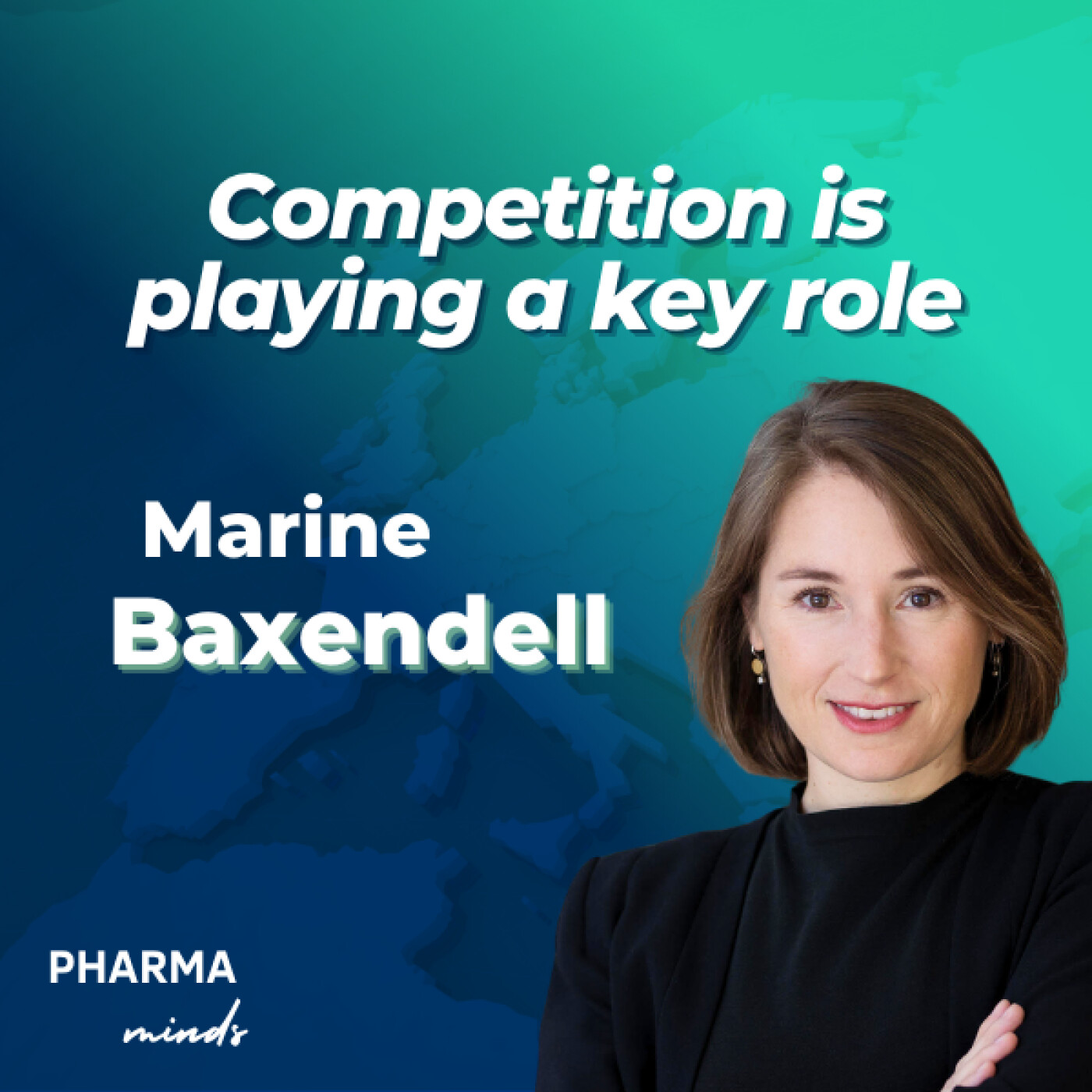
In this episode of Pharma minds, I speak with Marine Baxendell, CFO and co-fonder at xcube.bio, about a fundamental shift in the economics of pharma innovation.
Science is moving faster. Competition is accelerating. And at the same time, MFN pricing, healthcare budget pressures and increasingly complex market access are challenging the traditional model on both sides of the Atlantic.
An innovative treatment could once expect five to eight years before serious competition entered the same space. Today, Marine argues, that window can be closer to two or three years, even while the original molecule remains protected.
So what happens when the time available to capture the value of innovation gets shorter?
We explore:
◾️ Why the next wave of pharma innovation is structurally different
◾️ What MFN reveals about the limits of today’s pricing model
◾️ Why demonstrating patient value earlier is becoming critical
◾️ What is really slowing market access in Europe
◾️ Why being first to market may no longer be enough
◾️ And what a more sustainable model for pharma, payers and patients could look like
Marine’s perspective reframes MFN not simply as a threat, but as a signal that the rules of pharmaceutical innovation are changing.
This is episode #4 of Europe’s Access Dilemma: five perspectives on how Europe can make innovation affordable.
To find Marine Baxendell:
LinkedIn: https://www.linkedin.com/in/marine-baxendell/
Resources mentioned in the episode:
📌 xcube.bio : https://xcube.bio/
___
📩 Subscribe to the newsletter : https://nathalielahitte.substack.com/
Hébergé par Ausha. Visitez ausha.co/politique-de-confidentialite pour plus d'informations.
0:00 Welcome to PharmaMinds, the media for committed leaders in pharma and healthcare. Here we take the time to explore the ideas, strategies and people shaping the future of our industry. If you'd like to understand before the rest, subscribe now and hit the bell to stay ahead. Even when you come up with a very brilliant innovation and life-changing innovation, the window before some competitive asset might come in is more like 2 to 3 years rather than 5 to 8. Since MFN has been announced in the last 18 months, what we've observed is that biopharmacists, in particular the ones with large commercial portfolios, are spending more time running scenarios on the potential impact on their P&L of the lower reference pricing in Europe than actually accelerating the launches to reach more patients.
0:45 MFN might be perceived as a death sentence for innovation in Europe. It's perceived as a threat. I believe it's a signal. I am with Marine Baxendel. To take a clear eye look on the model we have today and at the global balance behind this, mine brings a rare combination of finance strategy and the market access experience from investment banking to Deloitte to Biogen Digital Health across both Europe and the US and she's now the CFO and investor at XCOOP BIO. Together we'll explore why the current model is reaching its limits and more importantly the realistic solutions that could help.
1:26 help innovation reach patients faster. Marine, welcome. Thank you so much for having me, Nathalie. I'm super excited to be here. Mine, let's start with the scale of what's coming. We talk a lot about MFN and pricing pressure, but in reality, we talk less about the volume of innovation in the pipeline right now. And for you, what makes this moment so critical? Yes, it's... I think what's interesting is obviously the last 70 years I've seen a lot of increase in science, but what we're seeing in the last 10 to 20 years is a change in the volume and the type of science that's arriving. It's structurally different. You have for the first time biologics and cell engine therapies that are outnumbering small molecules.
2:11 You have half of the last drugs that were approved last year at the FDA were for rare disease, and that's where the science is going. It's for smaller populations. higher proportion value, less one-size-fits-all. I had the opportunity to work in precision medicine a lot at BDH, and so it's an exciting field that's really driven by emerging biopharma around the world. They're accessing the revolution in genomics, in protonomics, in all of these omics. And it's a wave that's accelerating by the massive investments you see in early discovery in China, but also it's bound to further accelerate as we see things like artificial intelligence. and other technology being used to accelerate and improve the performance of early stages of discovery.
2:57 Okay. And aside this, we have MFN, which is often framed as a European problem. But you've worked in the US too, and you know this system. And do you think is really Europe the issue here? Or is that something really deeper happening globally? I think the link with... above is you have this volume of science coming through. And so the question about commercialization and access is becoming more intense. And MFN is really at the crux of this. So most favored nation is making two things appear that are not new. The first one is the fact that fiscal pressures are increasing globally. So both in the US and in Europe, putting pressure on public payers for drugs.
3:39 But the second is the fact that Europe, you know, is doing this for a long time, but governments in Europe are paying for medicine out of public money. So they've always been negotiating really hard on price. When you pay with your own money, you negotiate hard. That's what you do and you should do it forever. And I think it's just good practice. What's happening with MFN, it is exporting the habit of Europeans to negotiate hard on price to the US through the reference pricing mechanism. So suddenly the fact that Europeans negotiate hard on price is becoming a global problem for biopharma. But, you know, I think it's... it's a bigger problem than just a geographic order. Okay. Maybe a few words on what you've seen in the U.S., which is really different in the way of thinking or in the way of paying drugs?
4:26 Getting access or getting the right to distribute a treatment in the U.S. is relatively straightforward. And so it creates the illusion that if you contrast it with Europe, where you have to go through a joint... assessment of the clinical value and then individual country processes. The U.S. looks relatively easy up front, whereas the European one looks quite complex. But actually in the U.S., what happens after you're on the market is you have to negotiate almost each patient one by one. The access happens at the level of the physician, at the level of the hospital, and you have to negotiate and navigate a very fragmented payer system after you've been on the market and you've put a price.
5:10 In Europe, getting a price is hard, but once you have a price, you have universal access. But that's the big difference, and it's hard to, you know, for having been on both sides, it's a very different type of muscle, different type of capabilities, and we see different philosophies on how the prices are being set. your opinion. prices will have to reduce also in the U.S.? Yes. So the reason why MFN is even a topic is because the overall cost of health care is continuing to grow. But in particular, the part that is paid by public money in the U.S., which is Medicare and Medicaid, is, you know, the insurance trust fund is deemed to be running out of money maybe by 2033 or, you know, in the next few years.
5:54 And All the politicians are looking for ways to reduce the financial pressure and to reduce the cost of pricing. So the cost of pricing from this pocket is going to appear. I also think the wider patient population in the U.S. that has a very high out-of-pocket cost is continuing to put pressure on their politicians to reduce the cost of health care overall and the visible and very sometimes overly advertised cost of medicine. But I think it's an overall health care cost in the U.S. And behind all those pricing models and budget discussions, there is a patient. And how do you keep this reality alive and what do you think it changes for the science itself?
6:38 Yes, so what's a very important piece when you bring the patient into the picture is the benefit assessment of the health technology assessment in Europe. Once we define the value, really look at what the benefit is for the patient. And if you start incorporating the patient very early on in your R&D process, which the best R&D machines always insist on knowing which patient will benefit one day from the therapy, understand what is the unmet need, and very importantly, understand what are the alternatives of care for the patient. Sometimes we get very excited about a molecule solution, about the fact that the pathway works, the cells are doing the right thing.
7:19 thing. And yes, it is fantastic. At the same time, you also need to look at what's the alternative for the patient. If the patients are facing a fatal disease, the value of the therapy that you're bringing is quite obvious. But if the patients are living relatively well today with alternative treatments and care, you have to actively justify the burden that the therapy is bound to have. There's side effects, there's cost, there's time. And assuming that you can justify the cost after you have launched. is where the model maybe used to work in the past and it's just not acceptable anymore. You really have to anticipate that value demonstration during your clinical study because what you measure is what you can prove and what you can prove is what you can get paid for.
8:03 Okay. And you see a difference already between Europe and the US in the way we have to plan our development? I think, if anything, I see a convergence. in the sense of the Europeans have always been very demanding early on in having that head-to-head or comparator as part of the clinical assessment process. And I think there's two things. One, MFN is one driver, but I think in general, the competitive landscape in the U.S. and globally for darts is becoming so intense that I think being able to demonstrate value very specifically at the moment of prescription.
8:44 with the right data is driving better design of studies overall. But there is still a discrepancy where you cannot get through the door in Europe without that data. And you haven't been able to do that for over 20 or 30 years. Whereas in the US, this is still a shifting process where you used to be able to just demonstrate the absolute benefit of the drug and worry later about your competitive position. If I follow your thinking, it means... pharma companies will have to invest more to provide more data and to have a better overview from the beginning it means years before of the future life of the project entire life of the project which means it requests even more to the to the company yes i think it's a it's a good point it's something in a way it's and it's always been the challenge that's been faced by the company so far it's often a trade-off between the riskiness of your studies and the impact of the data that you You get, right, the safer the study is, the less likely it is to demonstrate a value-added benefit relative to the right comparator.
9:50 But you're more likely to have a successful endpoint. And now the question will be the trade-off between... Not necessarily a more expensive study. Sometimes it's slightly more expensive, but it's just a different design that takes a bit more risk in terms of the possibility that you can't demonstrate the benefit versus the other one. That being said, I think most innovative therapies today, when you are in a rare disease space and when you are in an orphan designation in particular, the question is less about comparator. It's about measuring what matters to the patient. And I think, for example, we are looking at recent launch like Springworks, which just had an approval in Europe for two very precisely defined rare population.
10:33 They had a fantastic value demonstration strategy. They think they've done really well in demonstrating value from the asset because they've been thinking about this access for a long time. And I really think it's about a mindset and a design choice rather than necessarily putting more money into the... into the development. Okay. Still, there is a gap between the treatment that works in a trial and the treatment that reaches the patient. In Europe today, what is really actually blocking for you? So it's a good point. I think first I'd like to establish the fact that I fundamentally believe that Europe remains open and committed to funding radical innovation and to provide access to patients in life-saving therapies.
11:19 In my mind, there's three aspects that make access or at least accessing your being to be perceived to be locked or complex the first one is the the structure and we alluded to it the second one is obviously the uncertainty on global pricing and the third one is the commercial model if i start with the structure and we alluded to this earlier is the process to gain reimbursement across europe is still complex right they've tried to make it more uniform through the joint clinical assessment but they still provide only the clinical overview and pricing and reimbursement still needs to be done country by country. And for small emerging companies, this is still a challenge just to deal with that level of complexity to eventually reach a number of patients that's similar to the US.
12:07 That being said, the challenge is worth it because then you have the universal reimbursement. So that's the structure. I think that in the short term, what's happening, the highest impact on access is the uncertainty on the impact of US on US price. There's always been a delay between how quickly the therapies can be launched in the U.S., how quickly they can be launched in Europe because of all the factors we've discussed. But since MFN has been announced in the last 18 months, what we've observed is that biopharmas, in particular the ones with large commercial portfolios, are spending more time running scenarios on the potential impact on their P&L of the lower reference pricing in Europe than actually accelerating the launches to reach more patients.
12:49 right Twitter The uncertainty is slowing down internal processes. One thing to note, this is more true for disease areas that are not often or not rare, where we still see things moving forward. But I think that uncertainty gives the impression that the market in Europe is completely blocked. Two more points on this one. So still on the uncertainty of the price, complexity is the fact that each country in Europe is responding a bit differently to it. The national responses are different. You've seen that the UK has raised the... the nice threshold for quality for the first time since 1999. I mean, it was ridiculous a bit that it had not been changed since 1999, but you needed the pressure of MFN to make that move.
13:30 But it's, you know, the shift has raised the value of treatments in Europe and the UK. You have Italy that's raising their budget funds. You have Germany that is doing cost containment so that they can continue to fund innovation, potentially providing better price negotiations for high impact assets. And it's great to see things moving towards, you know, the points we were discussing around more access for innovation, but it's also not moving as one. So each market has a little bit of their own edge on this. And I think when you're looking at it from the outside, it's not always transparent and clear how this can be addressed. Then if you look at access, what is existing, the model is how it is.
14:15 You have some biotechs trying to go by themselves. It's more and more challenging in terms of resources they need. What do you think about this situation? Is it feasible for small biotechs to enter? Or is it the game of big pharma to put products on the market? How do you think about this? So it's a good question. And I think looking a little bit historically is helpful in this context. Most innovation or many innovations have been brought to Europe, Ito Beilash-Fama that were taking over overseeing the global rights or smaller pharmaceutical companies that have been taking the licenses for the regional rights and that model today this in licensing is is really not really working because what it does is it removes the control From the biopharma on price and in the uncertainty of the MFN context, it creates a real dilemma for the biopharma.
15:11 Which is normal. It's completely normal, but it means it has dried out, right? So you suddenly have like your normal channel to commercialize in Europe that is not happening. Many emerging biotechs are still considering going alone, but they know that it's a high risk and it's also very importantly a big drain on their... leadership, team capabilities, and time and focus, which is sometimes at odds with what they're supposed to be focusing on in the US. So it's a real tension. And so we feel like overall, the solutions are not really there for, in particular, that precision medicine, those niche, rare, and retargeted therapies.
15:54 What we've seen work over the last few years is the concept of a co-commercialization. We think this is the way to solve for the MFN uncertainty today, where you have, you know, there's still control from the original biotech, but you take the expertise locally. So obviously, XQBio has a platform that's specifically engineered for this market entry solution for emerging biopharma. But more broadly, I think the appetite for this kind of structured already exists. You can see it through the royalty financing, which is a similar approach to funding assets while keeping the control. So what has been missing is not the investor appetite. It's really the execution solution.
16:35 And we hope that us and others can really crack this by changing the commercial model. And if we look at the prices and the economics behind this, do you consider it can be sustainable to have more and more products each negotiating one by one in front of the... institutions, country by country, or is there something a bit different to think, to propose, to get a win-win in terms of, in the end, for patients and for access in Europe? Yes, what's interesting around pharma is there's one person receiving the benefit, which is the patient, right, who is the person who needs the therapy and receives the benefit.
17:25 And you have an entire ecosystem around. that is organized to deliver that benefit or pay for that benefit. But the alignment of interest is the thing that's the hardest to set, right? Because you have investors on one hand who need a return, you have the payers who need to maximize their budget, you have all of these stakeholders that need to be optimized. And I think this is why it's such a difficult question. One thing to share is the process by which we have funded so much innovation. In the past 70 years, it's been through protecting the treatments and patents have been a fantastic tool to create. That being said, I think that what it used to be is like if you had an innovation, you would be alone in that space for probably five to eight years.
18:13 And it was fantastic. And you could set the price in particular. Yes, you could set the price wherever and you could maximize those returns to invest in the science. I think it's the right thing to do. But you were like maximizing that. The situation today is both... Obviously, there's what we discussed before about the pressure, both from the U.S. and Europe, everywhere to lower prices. But very importantly, I think it's the competition, right, that is going to change that dynamic. Because now, even when you come up with a very brilliant innovation and life-changing innovation, the window before some competitive asset might come in is more like two to three years rather than five to eight. There's a simple way of looking at this, which is the baseline data protection, which is really the biggest protector against.
18:53 historical competition in Europe, the baseline data protection used to be 10 years and it's now eight plus one. So depending on your data, but even with the eight years of data protection, you're actually in a context where innovation is changing so quickly that you can still be protected on your very specific molecule, but there's going to be something slightly better or slightly, you know, just more specific or prevalent instead of prevalent. a real change that may be produced within the next three to five years instead of the eight to ten, which used to be the time that it took to just replicate your molecule, right? So I find that whilst there used to be a play of extending your IP protection, and there's still an incentive, obviously, to extend your IP protection for as long as possible, the competition doesn't play only on the exact same, the replication of your exact molecule, and more on the overall richness of solutions that could be brought.
19:52 on the same disease. And so I think there's a real opportunity here as the payers are concerned about long-term. a long-term budget impact, to acknowledge the fact that competition is playing a key role in keeping price low and paying for true innovation when the innovation arrives. Funding, we see that even in Europe, I think there's a misconception that the prices are low for dramatic innovation. They actually are very generous. If you can show benefit, concentrate the value and the high prices for those true innovations that are life-changing, enabling the patients to get access to. that transformative therapy and acknowledging the fact that if better solutions come up, the competition will reduce prices and it reduces them almost automatically or like by true market competition in the US eventually, but in Europe, it's usually forced by the payer.
20:44 But I think that's the way and that window hopefully should optimize for both. Okay. It already exists like in terms of commercials to be the first in the market is always interesting, but you should also had this component from the payer perspective. Indeed, I think before you used to be like, I'm the first in the market that you should be good enough, right? Just, you know, I'm the first one, therefore it's enough. I think now it's, I am the first one, and I come with the data that sustains the value demonstration for patients. And I think that's where, if you want to have that robust conversation with payers over time, if you want to have that robust competitive position, Over time, investing in data, not just once you launch, it's not a post-marketing exercise.
21:33 It's really early and before you launch. I think that is going to be a key differentiator in value creating and value conservation for innovative assets. So what does a better model look like? Innovations, it could take the innovation waves and the patient could get access faster and the payers won't pay for... forever a new science. It's a combination of the three aspects. I think what you're saying is a good summary. The way I would put it as well is funding innovative therapies is an investment. It's not a cost. And I think that's where the shift needs to, the mindset shift is important.
22:16 You're investing in innovative therapies. One reason to think about it that way is first, the combined payoff of investments in healthcare over the past hundred years has been Incredibly positive for overall economic growth and the contribution of just the therapeutics to life expectancy and LGBT and others and therefore impact on economic is proven. Also, our payers and the HTA already are doing a return calculation. They're doing an ROI on the drug. That's the cost per quality. And many, many payers are looking at this. So you already have a dimension of what is really my return on investment when I pay for the drug. And the reason they pay for the drug is because the return is high.
22:57 And you're seeing more and more payers looking at return linked to the time, the productivity, the severity, and broader and broader social impact of a drug beyond this. So you can really measure how worth it is. It is really worth it to pay for it. And I think that's justifying the funding. It will help the taxpayers understand why we're paying for pharma, but also it might bring more investors into pharma. I think, to be honest, institutions and the change in the big model is going to be slow. Institutions move slowly. And what we believe is there's a need in the short term to align incentives. And, you know, those players in the piece, I think there's pricing models that help align incentives between pharma and payers and patients where innovation is paid for when the patient actually gets the outcome.
23:53 And I think those are continuing to be rolled out for high value therapies. And maybe you have examples where it has been difficult in the past to evaluate a product? Yes, I think there's been a lot of thinking done, in particular in Europe, on outcome-based pricing and performance-based pricing for innovative therapies, in particular high cost innovative therapies. What has often been a challenge and presented as a challenge and has been a huge pushback in other countries is the... operationalization of the outcome-based pricing. Because you need a data point, you need to go find information about how the treatment is performing and outcomes are performing. And that data may either not have been collected or have been collected by stakeholders that are not aligned or not part of the contract, and it becomes complicated.
24:39 Back in the days, I worked on a performance-based contracting work where the outcome was very black and white. It was the patient either survived or died, unfortunately, after the treatment. And even that information was hard to find. We had the example where at the time it was Portugal, but like even to just to find the certificate of that could take six months. It was not necessarily available in the hospital. You had to find it in church, etc. I think the opportunity today is that many of these data sets are being digitalized. More and more of the governments and the institutions across the key countries are communicating on data or the data is being made more available for analysis and for use.
25:24 And that might put some outcome-based solution and some... some pricing models back on the table because they can actually be operationalized. The path has always been there. The insurance modelings have always been existing. And we think the incentives are definitely there. It's just the feasibility issue. And hopefully this will go down. And I think there's an innovation of alignment of interest also in the commercial model that can be done. It means the best case, it's improving what's already done. but by incentives to bring the focus on some parts of the journey, which is data and pricing from the beginning.
26:07 Yes, and really finding an alignment between the people who are funding the therapy, so all of the biopharma, the investors behind it, and the patients. I think the big driver of alignment is speed, because doing things faster reduces the cost. reduces the overall burden to the system, improves your competitive position, but it also very importantly brings a life-changing solution and treatment to a patient when they need it. And I think that is a really strong alignment of interest. And I think if we can accelerate the speed throughout the life cycle of the treatment, whether it's during the R&D phase, but in our side, we think it's really through the commercial access phase, accelerating access to patients.
26:55 We think it's a way of realigning interests and making sure that a situation like MFN or additional pressures on the healthcare system are mitigated whilst the institutions move to the better place. I see it also as a leadership act, a proof. It's a differentiation to act fast. I think MFN might be perceived as a sentence or a death sentence for innovation in Europe. perceived as a threat, I believe it's a signal. I think the innovators who can see the signal early are building the discipline in their R&D process to get the data, to validate the value, to ensure they have the right arguments.
27:42 And those innovators will be the ones who bring that innovation wave to Europe and break through the perceived block of MFN. Thank you, Marine. What you're describing is not really a reset, but it's focusing more maybe on the science, on the ambition, on the economics. You really focus on pay what you bring, when you bring it, and to the patients who need this. Yes, I also get in mind the discipline applied early to get the science and the wave of innovation come.
28:23 If you have maybe one advice to give to a biotech CEO? I think the ones who are most concerned at the moment are the emerging biopharma CEOs. They're not clear in terms of how it feels like the goalposts are moving. You know, the game is changing around them and it feels a bit unfair. Obviously, after all the work they've done on the science, I believe that the right thing to do today is to keep options open. to focus on the patient and the value you want to demonstrate and bring to the patient and operate in a lean, flexible and fast way wherever possible.
29:04 If you need help, you can call us. How do you feel confident about all this? It's hard to feel confident in what feels like a political and policy tornado. There's not a lot of... I don't think anyone who said they're perfectly confident in what the future looks like is probably not looking at the details. I think it's in all these moments of change. It's about anchoring on what's important. I think impact on patients, value for patients and a conviction that we can do the right thing. And our societies will do the right thing of bringing innovation to the patients and find ways of bringing that innovation to patients.
29:49 I think that's the thing that gives me confidence and energy. I also think the human ability to... Find a solution in the midst of problem. I think we are coming up with something that is quite unique and is a different model to what was done before because the moment needs it. And I believe we're not going to be the only ones. So this is what gives me confidence in the future of innovation in life sciences in Europe. Yes, I feel also we have a mix between the MFN, but there's a lot of competition rising, which forces challenges. more and more to propose something different.
30:29 Thank you, Marine. Thank you so much, Nathalie. It's been a pleasure talking to you. Thank you for listening to PharmaMinds. If this conversation inspired you, subscribe to the channel and share it with your colleague. And for deeper insight and leadership takeaways, you can join the newsletter. The link is below.